
Product Search Visibility API for E-commerce and Retail Brands
When a customer searches for a product category, which listings appear? Which brands dominate the top positions? Which competitor domains keep winning the highest-intent queries? Those are search-visibility questions, and they are exactly the questions OrbitScraper can answer accurately through structured SERP data.
Who this is for
Built for e-commerce growth teams, retail merchandising teams, marketplace operators, and category intelligence platforms that need a repeatable view of product-related SERPs.
What teams use it for
- Track organic visibility for product-related keywords and category searches.
- Compare mobile vs desktop result composition for commercial queries.
- Pair ranking URLs with Extract API when you need content or page-level pricing signals from the destination page.
Visual reference
Existing OrbitScraper-style dashboards and workflow surfaces related to this use case.
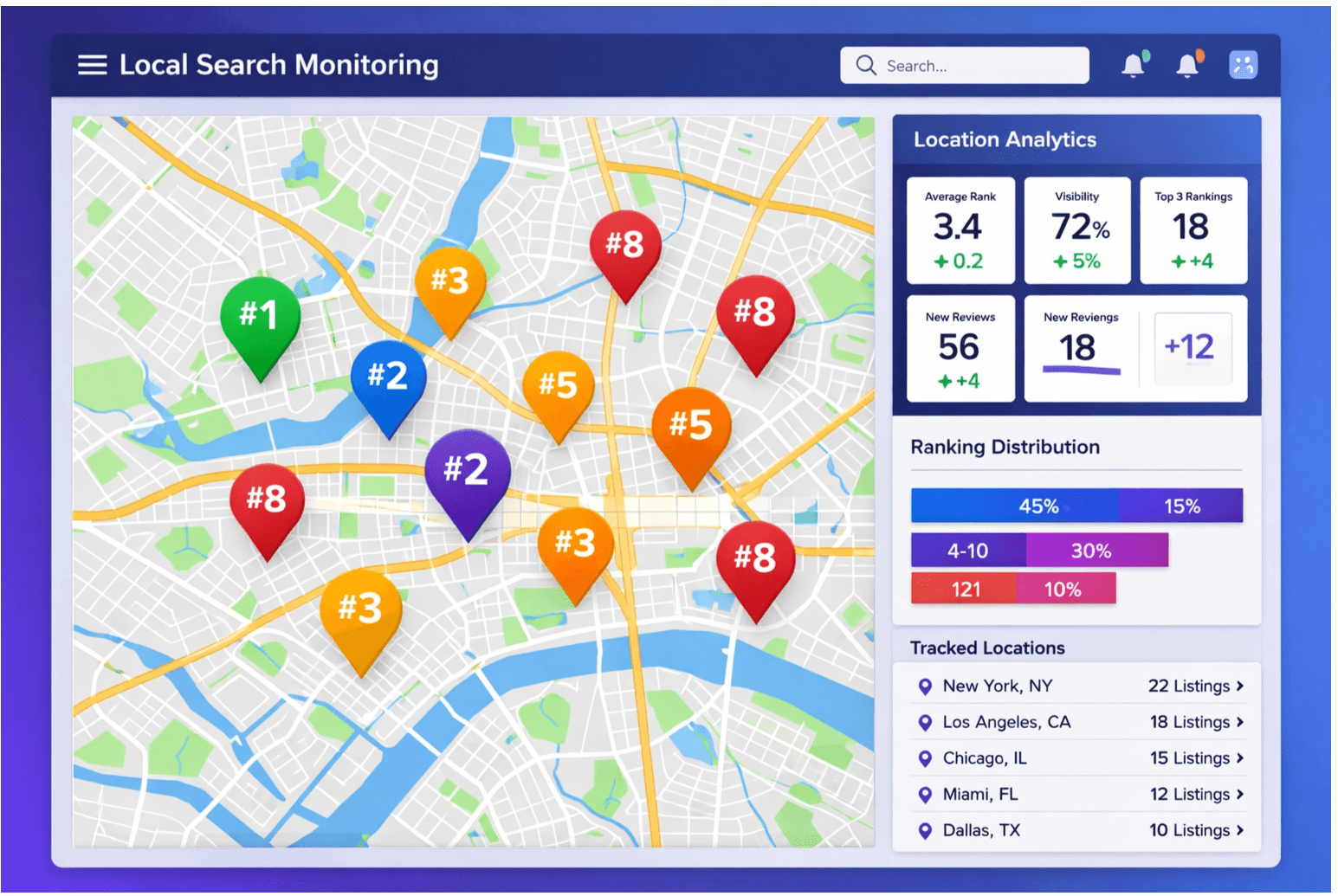
Commercial visibility view
Monitor how product-category queries change across brands, devices, and markets.
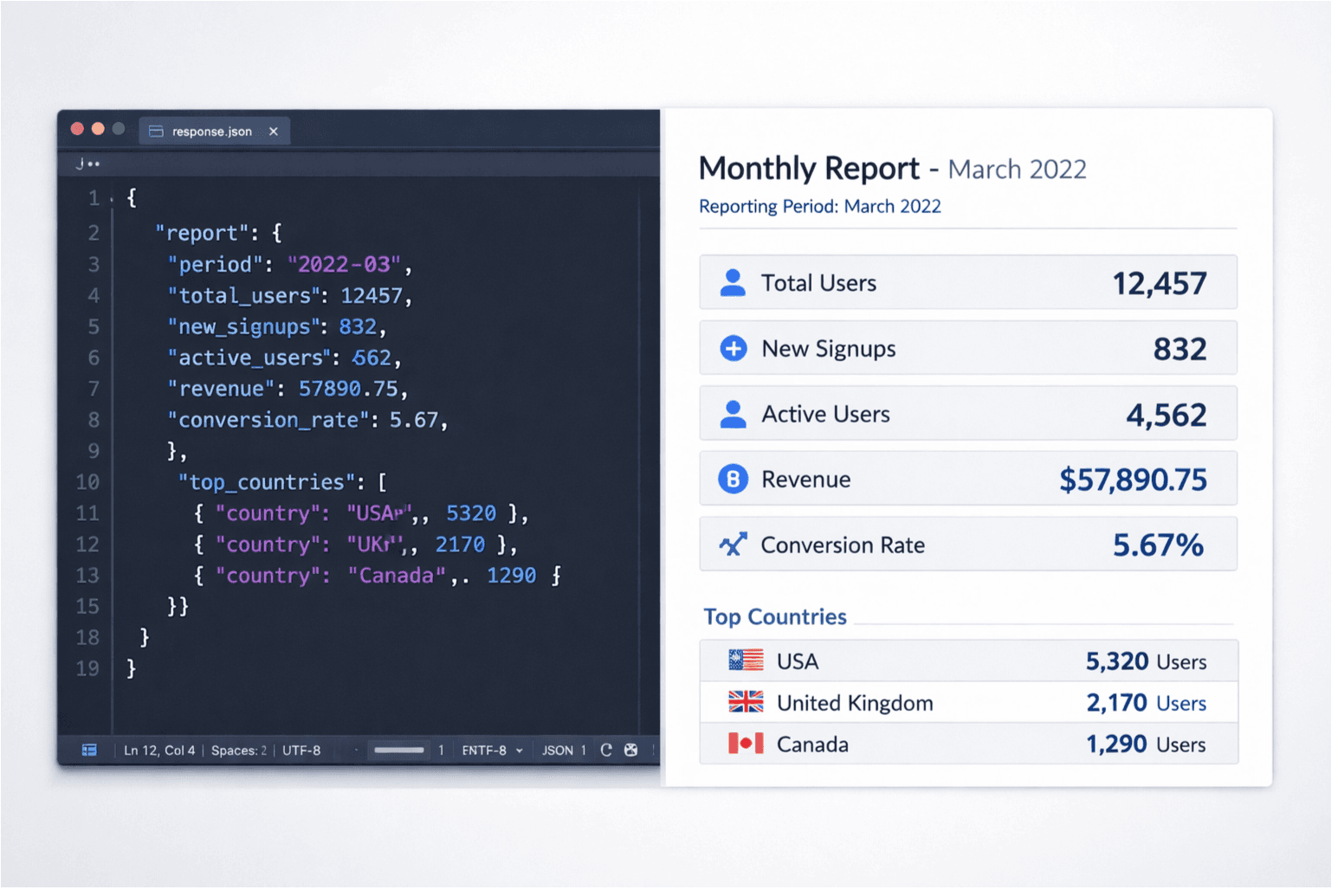
Search result reporting
Keep merchandising and growth teams aligned on who owns key category terms.
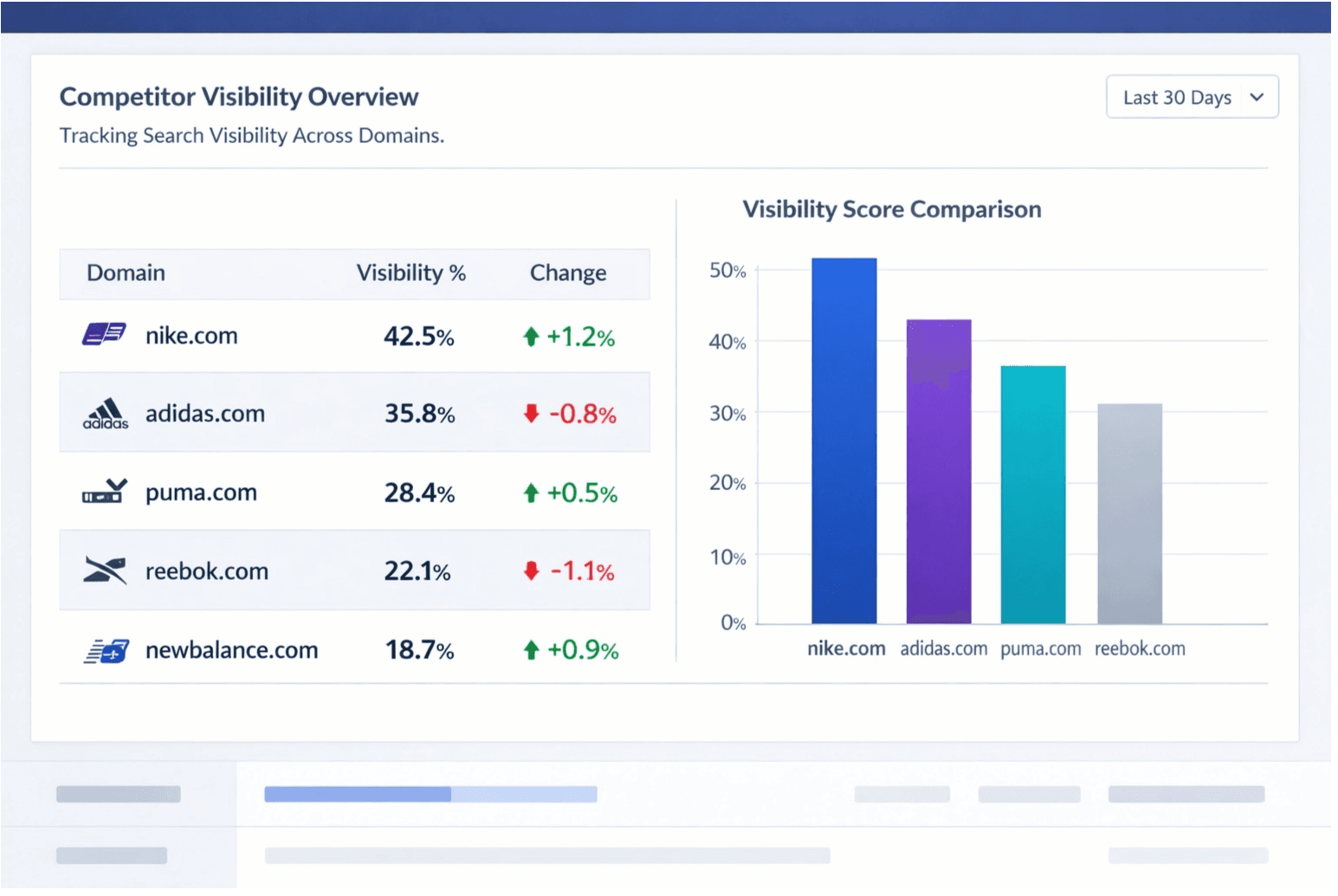
Competitor domain mapping
See which competitor domains keep appearing across your tracked product-category set.
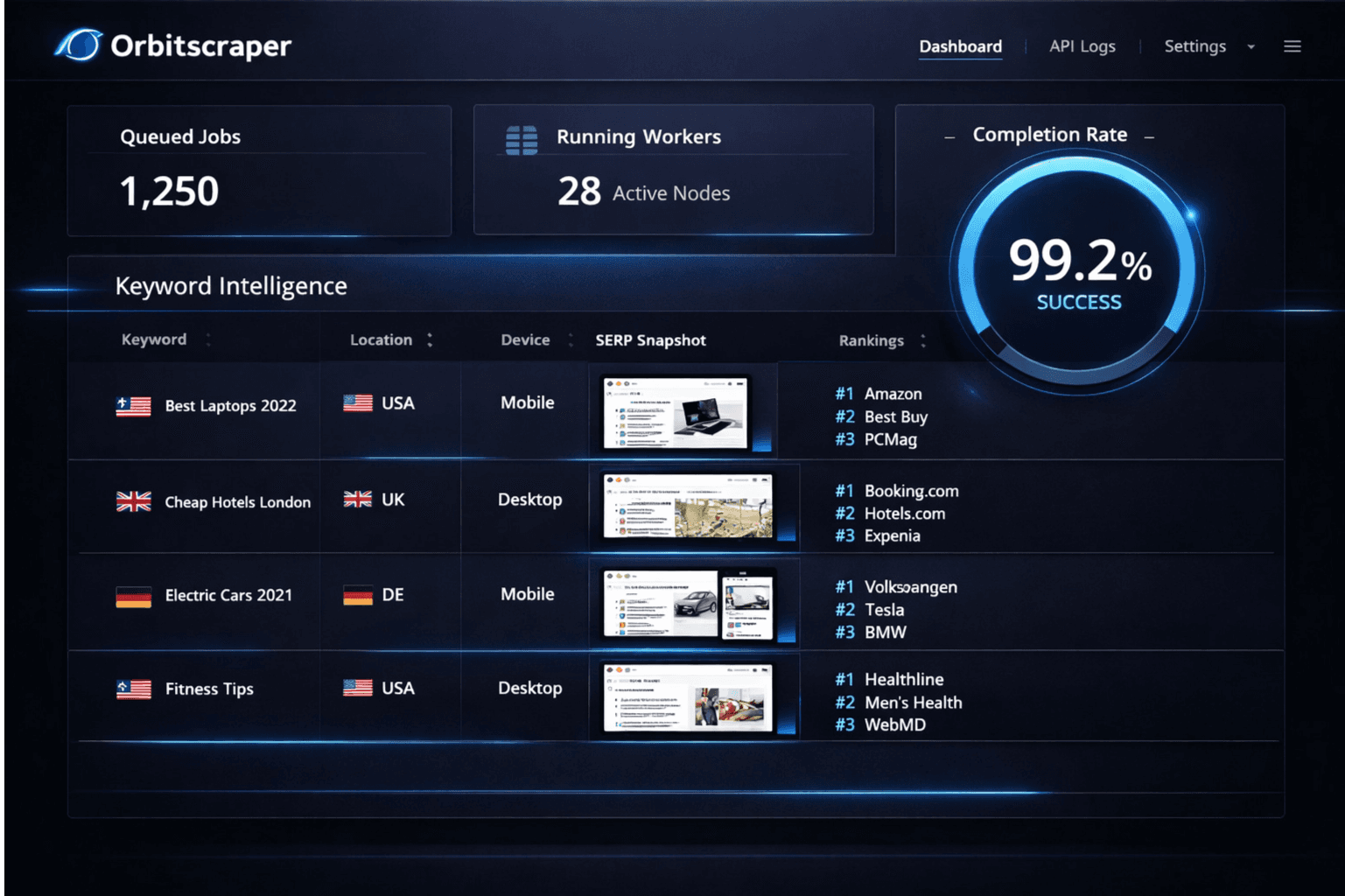
SERP snapshot panel
Store structured result snapshots for high-intent product searches.
Example scenario
A consumer electronics brand monitors 500 product category keywords daily. When a competitor's listing moves into position one for a high-intent query, the merchandising team is alerted within hours and can respond with a landing page, catalog, or campaign adjustment.
Code example — product search visibility check
Use standard commercial or product-category queries to see which brands and domains own the results. That keeps the workflow aligned with the current public contract while still giving merchandising teams a dependable monitoring surface.
Commercial category query
curl -X POST "https://api.orbitscraper.com/v1/search" \
  -H "x-api-key: ORS_your_key" \
  -H "Content-Type: application/json" \
  -d '{
    "q": "wireless noise cancelling headphones under 200",
    "engine": "google",
    "gl": "us",
    "device": "mobile",
    "num": 20
  }'
Standard product category query
{
  "q": "best running shoes for women 2026",
  "engine": "google",
  "gl": "us",
  "device": "mobile",
  "num": 20
}
What you can and cannot monitor
The most trustworthy product-search page is one that is explicit about boundaries. OrbitScraper is strong at search visibility monitoring. It is not pretending that SERP data alone is the same thing as direct product-page pricing or stock data.
- With OrbitScraper you can monitor which products, brands, and domains appear for a keyword.
- You can track position changes for your brand's category pages or product-adjacent landing pages over time.
- You can compare mobile vs desktop visibility and country-level differences for the same commercial query.
- You can identify which competitor domains repeatedly dominate product-category searches.
Pair with Extract API when a ranking page matters
Once a ranking page becomes important, the next step is usually to fetch the destination URL itself. That is where Extract API fits. Search finds the page. Extract pulls the structured page content so your merchandising or analytics team can inspect the live destination page.
Follow the ranking URL with Extract API
curl -X POST "https://api.orbitscraper.com/v1/extract" \
  -H "x-api-key: ORS_your_key" \
  -H "Content-Type: application/json" \
  -d '{
    "url": "https://example.com/headphones/best-wireless-noise-cancelling"
  }'
Why teams monitor search visibility
- Know when a competitor's landing page overtakes yours for a priority product-category keyword.
- Track which queries behave differently on mobile vs desktop for buying-intent searches.
- Alert merchandising teams to visibility changes before they show up in revenue dashboards.
- Keep commercial keyword monitoring grounded in a repeatable API workflow rather than manual searching.
Build this workflow with OrbitScraper
Start with the product tags above, wire the request pattern into your app, and use the structured response fields that match this workflow. OrbitScraper is most valuable when your team stops manually checking search results and starts treating search data like a dependable input to software.